Futbolo batai
Shop by ground type
194 products
Brand
adidasadidas 116
MizunoMizuno 10
NikeNike 38
PumaPuma 30
Surface
Age
- Suaugusiems 158
- Vaikams 36
Size (EU)
- EU 28EU 28 4
- EU 28½EU 28½ 3
- EU 29EU 29 4
- EU 30EU 30 8
- EU 30½EU 30½ 3
- EU 31EU 31 6
- EU 31½EU 31½ 3
- EU 32EU 32 12
- EU 33EU 33 13
- EU 33½EU 33½ 6
- EU 34EU 34 13
- EU 35EU 35 14
- EU 35½EU 35½ 7
- EU 36EU 36 41
- EU 36½EU 36½ 19
- EU 36⅔EU 36⅔ 17
- EU 37 4
- EU 37½EU 37½ 14
- EU 37⅓EU 37⅓ 13
- EU 38EU 38 44
- EU 38½EU 38½ 23
- EU 38⅔EU 38⅔ 22
- EU 39EU 39 13
- EU 39⅓EU 39⅓ 12
- EU 40EU 40 41
- EU 40½EU 40½ 35
- EU 40⅔EU 40⅔ 32
- EU 41EU 41 39
- EU 41⅓EU 41⅓ 41
- EU 42EU 42 93
- EU 42½EU 42½ 44
- EU 42⅔EU 42⅔ 59
- EU 43EU 43 37
- EU 43⅓EU 43⅓ 42
- EU 44EU 44 97
- EU 44½EU 44½ 46
- EU 44⅔EU 44⅔ 63
- EU 45EU 45 38
- EU 45½EU 45½ 24
- EU 45⅓EU 45⅓ 52
- EU 46EU 46 75
- EU 46½ 3
- EU 46⅔EU 46⅔ 44
- EU 47EU 47 24
- EU 47½EU 47½ 22
- EU 47⅓ 32
- EU 48 22
- EU 48⅔ 11
Price
How to choose your next football boots
Most people start with the boot they like the look of and work backwards. It is worth flipping that around. Decide what you are playing on first, because the soleplate is the one part of the decision that has a wrong answer — everything after it comes down to what feels good on your foot.
Firm ground (FG) is the default. It is made for natural grass that is dry or only slightly soft, and it covers most league football through spring and autumn. If you are only buying one pair, this is almost always the pair.
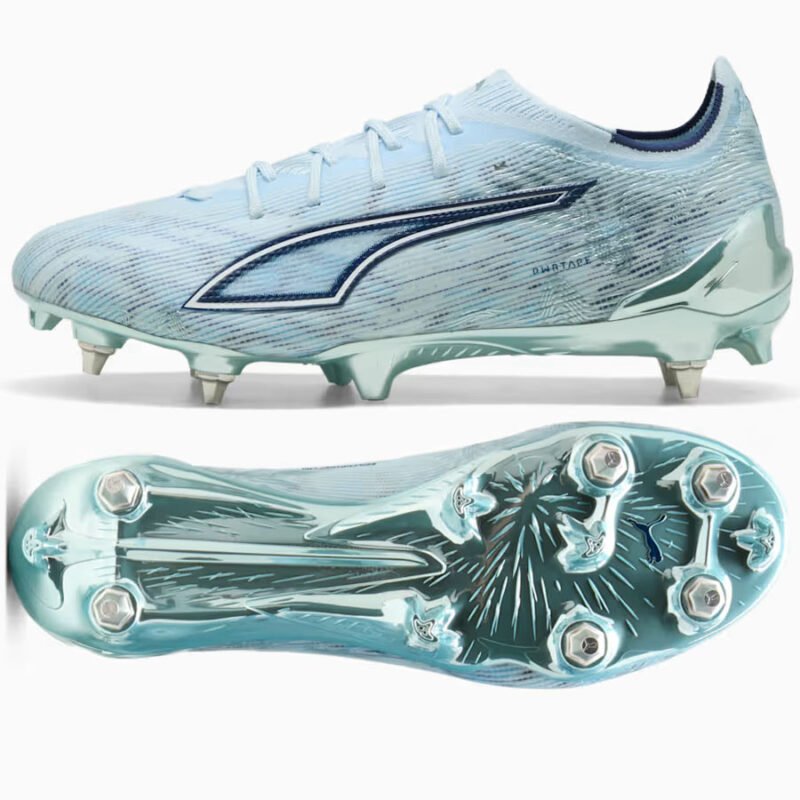
Soft ground (SG) has fewer studs and they are longer, often with metal tips. On a heavy winter pitch they dig in and give you grip that FG simply cannot. On a dry pitch they are uncomfortable and hard on your joints, so treat SG as a second pair for December rather than an upgrade.
Artificial grass (AG) uses a lot of shorter studs to spread your weight across the carpet. If most of your football happens on 3G, this is the plate that will last longest and hurt least. Turf (TF) covers older astro, cages and hard-packed surfaces, with a rubber outsole and dozens of small nubs. Indoor (IC) is a flat, non-marking rubber sole for futsal and sports halls.
Plenty of players wear FG boots on 3G and get away with it for a while. The studs wear down faster, the plate takes more punishment, and some brands will not honour a warranty claim on a boot used off its intended surface. Worth knowing before you decide.
A football boot should hold your foot still. Your heel should not lift when you push off, your toes should have a few millimetres of room at the end, and nothing should be digging into the widest part of your foot or across the top.
Length is the easy part. Shape is where people go wrong. Two boots in the same size can feel completely different depending on how wide the last is and how much room there is over the instep — a Mercurial is cut close and low, a Copa or a Morelia is far more generous through the forefoot.
If your feet are wide, going up half a size is usually the wrong fix. You gain length you did not need, your heel starts slipping, and the boot is still narrow where it was pinching. Look for a wider silo instead, or a leather upper that will give a little with wear. Knit and leather both mould to the foot over the first few sessions; synthetic uppers mostly keep the shape they arrived in.
Brands sort their boots into families, and each one has a character. Mercurial, F50, Ultra, Furon and Alpha are the light, close-fitting ones — thin uppers, minimal padding, a plate that wants to push you forward.
Predator, Phantom, Future and Tekela go the other way, adding texture across the strike zone and a bit more structure around the foot. Tiempo, Copa, King and Morelia are the traditional ones: softer uppers, usually leather, a more cushioned feel on the ball and generally the most forgiving fits in the range.
Do not read too much into the marketing. A striker can play in a Copa and a centre-back can play in a Mercurial, and nobody will notice. Modern boots are all light enough that the old speed-versus-control divide barely holds. Pick the one that feels right when you sprint and turn in it.

Every silo runs from a flagship model down through two or three cheaper versions — Elite, Pro, Academy, League, Match, Club, depending on the brand. The top one gets the newest upper material, the lightest plate and the highest price.
The versions below it usually share the same last, so they fit like the flagship, and often the same stud pattern. What you lose is weight, some upper technology and a bit of stiffness in the plate. For training twice a week and a game on Sunday, that is a trade most people would make happily, and it is the difference between €90 and €280.
For a growing child it is not close. Buy the right surface, the right fit and a centimetre of growing room, and put the rest of the money towards the next pair in eight months.
Leather still has a following for good reason. It is soft over the forefoot, it stretches into the shape of your foot, and it takes the sting out of a badly struck ball. It also needs looking after, and it will loosen slightly — so buy leather snug rather than comfortable.
Synthetic uppers are thinner, lighter and hold their shape for the life of the boot. Knitted panels sit somewhere between the two, wrapping the midfoot closely while staying flexible. None of them is objectively better; they age differently and they feel different on the ball.
Laceless boots give you a clean surface to strike through and a very close fit, but you lose the ability to adjust tension across the foot. If your instep is high or your feet are an unusual shape, laces are the safer buy.
We ship across the Baltics and the EU. Delivery is free over €80, everything in stock leaves the same working day, and returns are free for 30 days — try them on a clean floor indoors and send them back if the fit is not right.
If you are stuck between two sizes or unsure whether your pitch counts as firm ground, message us before you order. We play too, and we would rather answer a question than process a return.
Most people start with the boot they like the look of and work backwards. It is worth flipping that around. Decide what you are playing on first, because the soleplate is the one part of the decision that has a wrong answer — everything after it comes down to what feels good on your foot.